Sunday, January 6, 2013
Chapter 2
I recently wrote and directed a video for my production course called Chapter 2. It's inspired by the poem "Get Drunk" by Charles Baudelaire (which you can read here). It stars my friends Ryan Cameron and Jeet Nagda. Check it out if you so choose. Also subscribe if you like. I'll probably put up some more stuff.

Wednesday, January 2, 2013
My Thoughts on Why the New Year is Important
So I feel bad that I haven’t posted in a while. I’ve
been busy working through my own stuff so I haven’t felt passionate about
anything one way or another for a while. A while. Anyway, that’s why my last
five posts have been kind of cop outs. But I decided it was time to write
something thoughtful again, especially since that appears to be what you guys
prefer. So I give you my thoughts on why the New Year is important.
Before we talk about why the New Year is important,
let’s talk about why it shouldn’t be. What is a year? “Year” is just the name
we give to a single rotation of the Earth around the sun. Should there be any
sort of important emphasis on a day that could just as easily be any other day
of the year? I mean, if we chose to start the year on March 25 then January
first wouldn’t hold any importance at all. It’d be just another day, like April
10, December 28, or July 20. So then, why put such emotional, personal, and
cultural significance on a day that is only significant because we chose it to
be? I think that this is a valid argument as to why January 1 is a day like any
other, but I don’t think that removes its significance. Every day is
significant. Those dates above are each significant. They are my mother’s
birthday, the day I became a Christian, and the day we landed on the moon,
respectively. Every one of those days holds extreme importance for many, many
people: everyone my mom has ever interacted with, me, and every person on this
planet. So I think it is pretty safe to dismiss the idea that a random day can
even be insignificant, as you can pick any day and find something important
that has happened on that day - whether it was life being extinguished, being
lit, being engorged by something amazing like love, or simply continuing. Every
day is important because there is something unique and amazing in every day.
So then, we know every day is important, but that
still leaves the doubt that the beginning of a year is what makes January 1
significant. Perhaps it’s only important because it’s a day just like any
other, that is to say, a day unlike any other. I would say otherwise. See, I think
the significance of a New Year is important to that day. (In rebuttal to my
earlier point that the New Year could be any day so thus insignificant, that’s
idiotic. We didn’t put it on any other day. We put it on January 1. So shut up.)
For though the World goes on rotating and revolving, it is begins anew every
year. The constellations start their migrations across the sky over and the
seasons begin their cycle again. But nothing is quite the same. The
constellations change based on the expansion of the universe and whether or not
some star somewhere has twinkled its last. The seasons change their
specificities based on the changes to the atmosphere. The world is constantly
changing, and though it starts its cycle over, it never repeats the exact same
cycle. In the same way, we may be experiencing January first again (second
now), but this is a new January 2. This is January 2, 2013. And we’ve never had that before. And we’ll never have it
again. This moment is brand new and it only lasts as long as it is right there.
So we have to embrace that newness. So the New Year is significant because it
is us starting over as something new.
But that is not all that makes the New Year
important. Indeed, it is not even the most important aspect of the New Year.
What’s most important about the New Year is the gusto with which we approach
it. See we know the year is new. We know this year has never been and never
will be again. So we also know that we need to seize that moment while it is
there and to make it the best year we have each experienced. Resolutions have
become a bit of a joke in our culture – the idea that we’re all going to be in
the gym for the next two weeks then we’re all going to be back at Kentucky
Fried Chicken. But they are not all failures. And while we may like our deep
fried, genetically altered, oil sponges KFC calls chicken, we still try to
improve every year. No one approaches the New Year thinking “this year I need
to be worse.” And if they do they are a waste of space. We all want to improve.
We are all hoping, and some of us even striving, to improve ourselves and the
world around us. That, my friends, is why the New Year is important. Not
because of alcohol and stupid ass glasses made out of numbers, but because we
all know deep in our bones that the way we are is crap, or at the very least
mediocre, and that we need to be constantly bettering ourselves. The New Year
is significant not only because it is new, but because it will hopefully be
improved. And that is the only time that statement hasn’t been an oxymoron that
I’m aware of.
What saddens me is that we lose sight of that in a
week. Like clockwork, we all lose sight of the fact that we are like the Earth
and every moment is a new one for us. And since every moment is new, and we
have the capacity to improve ourselves and everything around us, it is our
responsibility as stewards of the Earth to actually do that. We develop this
odd philosophy somehow that the status quo is “ok.” We are the way we are. There is nothing we can do about that, so we
just won’t. But that’s not the case, every one of us has some improvement
to make on ourselves, and saying so isn’t offensive. It’s offensive that people
think they have nothing to do to improve themselves. So I know it’s a long
shot, but I remain hopeful that one year, maybe this year, we won’t forget. And
we will constantly strive to better everything we can – for ourselves, for our family, for our friends, for (our) strangers, and for our home.
Happy New Year everyone. Make 2013 a good one.
Friday, December 14, 2012
Poetry I Wrote - Probably Badly
Hey. So I write prose. I don't know if you've noticed from EVERY SINGLE OTHER post on this blog. Even the one I called a poem is really prose written in very short sentences. These two are actually poems. The first is a sort of modified sonnet and the second one is a prose poem. If they're really bad feel free to let me know and I won't post poetry up here again. This is kinda an experiment. Have fun. Also the first poem should really be read with this playing in the background.
A Rain Sonnet -
Drips echo up in to my ear
Washing clean my cares and my fear
See it’s not the feel nor the sound
Wherein stormy pleasure is found.
Rather tis the thought may that I
Prove the sadness brought by the
rain
Fiction, Fant’sy, and Brittle Lie –
Lies of sorrow, sadness, and pain
“sad is happy for deep people”
Just to feel is proof of my life
Life is not found in home’r steeple
But in good hope after strife
How can sadness stay here and not
Flee if’t exposes what I’ve got?
The Source of Utopia -
For me there is no single utopia. I
am enthralled by the serene life of the countryside. The slow moving people.
The sweet smelling wind. The sounds of life in its purest form.
Yet I find an equal peace in the
city – in the hustle and bustle of the city. The speeding of the always-cycling
train. The rising stench of a thousand hot dog stands. The dull roar of a city
that won’t sleep.
For me, utopia is the progression
of life reminding me I’m alive. Utopia isn’t a sight. Or a smell. Or a sound.
It is the amazing variety of sights in every place. And the ever changing scent
of the world. And the sounds of the different folk, flora, and fauna found
throughout the earth.
Sunday, December 9, 2012
Beauty in Mundanity - A Review of MFA Poetry Readings in the Narrative Format
The poetry reading started not with
a bang or a murmur, but with well-maintained introductions. I arrived just as
the first reader was introduced – Blake something – or something Blake. I had
biked here and was in all likelihood not the best smelling human being in the
room, so I was a little distracted when they announced his name. He is an
established author who has been published a number of times. He is known for
his humor, and he writes prose. Tonight, Blake will be reading his short story “The
Best Man,” which he admits to the audience is about his brother. It is
hilarious. Irreverent and mundane, the story details the narrator and his
brother’s trip to a tailor to get their tuxedos fitted. The story seems to me
to be an expose of the relationship dynamics between the narrator (who, under
first impression, appears to be a pretty solid reflection of Blake) and his
brother. The short piece details exactly how the narrator feels about his
brother and life in general. The whole thing was a surprisingly realistic and
uncensored (at one point the narrator ponders “rubbing one out” to a Victoria’s
Secret catalogue) portrayal of what goes on inside a man’s head. I thought it
was wonderful.
Following the reading I take a look
around the room. There is wine and cheese in the corner. Pretentious? Yes. Delicious
looking? Of course. Do I want some? Most definitely. Unfortunately I can’t
reach the wine and cheese due to the massive crowd guarding the concessions.
That’s when I notice that the room is full of people from my class who, like
me, had waited till the last possible reading to attend. It’s always nice to
know you’re not alone. Yay for procrastination. The next reader comes up, a man named Tommy
who will be reading us a few of his poems. Now until three months ago I had
never really appreciated poetry. And while this quarter has changed my
impression quite a bit, I was still shocked at how much I liked this guy’s poetry.
He writes about the most profound things – the imprisoning feeling of small
towns or the ubiquity of love in all aspects of life – and the most commonplace
– masturbation and the sadness of losing your favorite chicken and waffles
restaurant. His work truly showcased the potential for story and poetry in
every moment.
Tommy was soon replaced by prose
writer Kendra Fish. I definitely caught her name because I thought Tommy had
said ‘Fitch’ in his introduction of her. He did not. He said Fish. She was also
very impressive. She read excerpts from a story entitled “Both, Sister, mother,
More.” The narrative was difficult to follow because of how much she jumped
around during her reading, but from what I gathered, the story was about a
gypsy woman and her daughter trying to live a normal life in Belgium. The story
dealt with heavy issues like self-identity and sexuality extremely well, never
trivializing or demonizing them. It is a story that I can see coming together
to be a masterpiece examination of character growth and the mother-daughter
relationship.
At this point my back was beginning
to get tired from standing in the same position for an hour. But luckily the
last person, a woman named Megan, began reading her poetry just as I was
becoming uncomfortable. I did not like Megan’s poetry. Perhaps my mind was
tainted with the pain in my back and odd smells emanating from my dried sweat,
but I found very little intriguing or strictly poetic about her writing. To be
fair to Megan, she is a phenomenal writer; she handles imagery better than most I've read. However, I found her poetry to be lacking in any strictly poetic
qualities beyond vivid description, which should be a quality of all good
writing. I thought her descriptions were beautiful and well-conceived – I just wouldn't call them poetry.
And thusly the night ended. My
classmates and I ushered up to the front to get Tommy and Megan’s signatures
and we were off for long bike rides home and whatever else awaited us in the
night outside – now armed with the knowledge that beauty and more can be found
in every second we are living.
Monday, November 26, 2012
Prepping for 2012 - Best Films to Prominently Feature Bicycles
Before I get into this article, I’d like to apologize for my
last 2012 post. Normally I would just take it down, but since it’s part of a
series, I’ll leave it up. It was brought to my attention that the quality of
writing was not up to my standards for this website and I hope you’ll forgive
me and find this list to be more informative and inclusive of people who have
not yet seen these movies.
 |
| This was the second most painful scene to watch in a film that included testicle whipping |
I don’t know about everyone else, but one of my favorite
things to see in films is a cool vehicle. I mean when I saw the classic Aston
Martin DB5 in Skyfall this last weekend I had to change my pants afterward. And
I still haven’t forgiven Bond for choosing Vesper over his DPS in what is one
of the most painful scenes to watch in all of cinema, made all the more painful
by the knowledge that in order to get the shot they needed, the filmmakers
crashed three models of the car. That being said I think it’s pretty clear that
at least I, and I think the human race in general, have a fixation on the ways
we transport ourselves, particularly in films. So I decided to write an article
about bicycles.
The Four Best Films to Prominently Feature Bicycles
4. Butch Cassidy and the Sundance Kid
OK so it’s only one scene. But man is it an awesome scene.
Paul Newman goes for a ride in the countryside to the song “Raindrops Keep
Falling on my Head,” does some cool tricks to impress his lady, makes faces at
a bull, and flees the scene all on a bicycle. Paul Newman reminds us how manly
bicycles can be by riding straight up to Robert Redford and letting him know
he’s stealing his girl. The scene’s been taken off of youtube, so I can’t embed
it here, but as of this writing it was available on dailymotion here.
3. Kiki’s Delivery Service
| I'm sticking with bitchin as my adjective for this thing |
So this one doesn’t really feature too much bicycle, with
the exception of Jiji’s bicycle/bitchin flying machine, but since this article
was originally about bicycle messengers and brooms are kind of like bikes for
witches, I figured I’d include it anyway. Besides, I’m writing this article and
this is my website. So there. Anyway, my love for Miyazaki films isn’t exactly
secret and I particularly enjoyed this one because it’s just so cool. Not the
witch thing, though that’s neat too. No the idea of just packing up, moving to
a completely new place without any idea of what you’ll do there, getting taken
in by a kind woman who needs help around the shop, and starting your own
business (in Kiki’s case a delivery service) is such a cool idea to me that I
started researching homesteads while I watched this film as “research” for this
article. This is a gorgeous film and it so completely romanticizes the idea of
the messenger service to me that I also looked for bike messenger positions in
Orange County (there aren’t any).
2. Premium Rush
 |
| So sexy ... I mean boobs...yeah boobs |
This JGL film is a crazy ride (pun totally intended) through
New York. Making use of some crazy cool film techniques one normally wouldn’t
associate with the chase movie genre (i.e. nonlinear storytelling, Next style multipath scenes, and a story
dealing with something more complex than teen angst [although this film
certainly has its share of that]), Premium
Rush gives its viewers an impressive amount of suspenseful, action-packed
bicycle chase scenes. On top of that there is some legitimate emotion and intriguing
comic relief. To be fair, PR is not a
perfect film, it suffers from some pacing issues, unbelievable scripting, and wooden
acting. But the action, directing, and the parts of those three things that don’t
have issues make up for the issues. And never has a film made bicycling so
sexy. I mean I’m a totally straight guy and I found myself a little turned on
by Joseph Gordon Levitt.
1. The Bicycle Thieves

To be fair to Kiki, I almost put her in this top spot since
I love that movie so much, but I think The
Bicycle Thieves edges her out just barely for the best bicycle-related film
(Editor’s note: I didn’t see Premium Rush till after I wrote these
descriptions, and it wound up beating out Kiki for the number two spot but
couldn’t unseat this masterpiece.). This 1948 film about a father and his son’s
developing relationship as they search for the father’s lost bike is just
fantastic. It’s full of emotion and development and really says a lot about mid
twentieth century Italy – both economically and socially. It’s difficult to
describe this film without sounding even more pretentious than I’m sure you
already think I am (and I am a film major so it’s not exactly an unsolicited
opinion). So instead I’ll just trust that if you value my random internet lists
at all (which, let’s face it, who doesn’t?), you’ll just go watch the film. It
is with only a little doubt, the best film to prominently feature bicycles
ever.
As always if you agree or disagree please comment below. If you have an idea for my next list please share, cause I'm running out of ideas and I'm only two lists in.
Tuesday, November 20, 2012
On Getting Drunk
So this is not the next installment in my 2012 series. I'm working on that. I'll get it to you guys. But I was working on a response paper for a poem by Charles Baudelaire called "Get Drunk." Well that's what the English translation is called. I can neither pronounce nor read French, so I won't include any of that here. Anyway I liked the poem and had fun responding to it, so I thought I'd share it with you guys.
This is the poem:
Not included in original essay -
I'm not sure if I agree with this poem or not. On one hand, I think drunkeness provides us with one extremely valuable resource: the ability to just say or do something without regard for other people's opinions. On the other hand there are few things I value more than intelligent discourse, which can only come about with carefully weighted decision making. So I think if we go with the final reading of the poem I proposed and limit it to certain situations, then I'd agree. For example, its a lot easier to tell a girl you think she's beautiful if you have given up on all your inhibitions. But those same inhibitions help us debate things like politics, science, religion, morals, literature, and pretty much everything else. So I think in making decisions of the self, our hearts should be ruled by passion or morality, but in decisions regarding others and matters of intellect we should let our brains do the talking. But that's just my opinion, what do you think?
This is the poem:
“Get Drunk”
You have to be
always drunk. That's all there is to it--it's the only way. So as not to
feel the horrible burden of time which breaks your back and bends you to
the earth, you have to be continually drunk.
But on what? On wine, on poetry or on virtue, whatever you
wish. But get drunk.
And if sometimes, on the steps of a
palace, on the green grass of a ditch, in the mournful solitude of your
room, you wake up again, the drunkenness already diminished or gone, ask
the wind, the wave, the star, the bird, the clock, everything that is
flying, everything that is groaning, everything that is rolling,
everything that is singing, everything that is speaking. . .ask what time
it is and the wind, the wave, the star, the bird, the clock will answer
you: “It is time to get drunk! So as not
to be the martyred slaves of time, get drunk, get continually drunk! On wine, on poetry or on virtue, whatever you
wish."
And here is my response (sorry for the formal structure, it's for class):
In Charles
Baudelaire’s poem “Enivrez-Vous” (“Get Drunk”), he makes the bold declaration that
we as humans must always be drunk, so as not to be crushed by the oppressive weight
of life. He follows this with the assertion that it doesn’t matter on what we
get drunk, whether it be “on wine, on poetry, or on virtue,” as long as we get
drunk. Now I thought this argument was interesting, as “drunk” can be defined
in a general sense as being unable to make one’s own decisions, and thus
Baudelaire is arguing that it is better to go through life a slave to something
else than it is to make well-thought out decisions. However, what is more
interesting to me, though not entirely mutually exclusive, is the likening of
poetry and virtue to substances equally as capable of robbing a person of
sobriety as wine and the ways these substances can lead to insobriety.
First let’s examine poetry. Poetry
is a creation. Poetry and writing in general provide the deepest reflections of
a soul. Poetry serves as a canvas for those who write it and a mirror for those
who read it. Poetry reveals far more about the person interpreting it than it
does its subject. So if this is our definition and understanding of poetry,
then how is it intoxicating? I think that the expression and reflection a poem
provides often results in passion. We have a passion for knowing ourselves and an
even greater passion for knowing others. And from passion, both scientifically
and emotionally, comes an elation that robs us of our self-control. We whoop
for joy. We weep great tears. We scream in agony. So it seems that poetry
intoxicates by playing to our passions and freeing us from our inhibitions.
Now let’s take a look at virtue.
Where poetry was freeing, virtue is confining. Virtue limits one’s actions to a
set moral compass. While virtue’s limits on actions set it apart from the freed
action of poetry and wine, it can still get someone drunk. By removing a person’s
options, virtue allows for a certain freedom of decision. Morals limit a
decision to one option, thereby removing the moment of crisis that comes with
making said decision. Virtue removes one’s ability to make one’s decision by
removing all decisions in one’s life, thereby adhering to our definition of “drunk.”
Finally I think it’s important to
consider what effect this has on the poem. Our initial reading of the poem
suggested that Baudelaire is arguing that we be slaves rather than thinking
beings. However, poetry suggests just the opposite - that we need to be freed
from our inhibitions in order to live life to its fullest and not be “slaves of
time.” Thus the lack of control inherent in being drunk, whether off wine or
the passion of poetry, frees us from the weight of the world. However, virtue
suggests that this inebriation is also possible through enslavement to a master
other than time, namely morals. Virtue frees us from time by freeing us from
decision, making us drunk off of morals. After examining poetry and virtue as inebriants,
our reading must then be adapted to encompass the freedoms they supply. I
propose instead that Baudelaire is suggesting that in order to live life to its
fullest we must have all the cares of everyday life lifted from our shoulders
in any way we can.
Not included in original essay -
I'm not sure if I agree with this poem or not. On one hand, I think drunkeness provides us with one extremely valuable resource: the ability to just say or do something without regard for other people's opinions. On the other hand there are few things I value more than intelligent discourse, which can only come about with carefully weighted decision making. So I think if we go with the final reading of the poem I proposed and limit it to certain situations, then I'd agree. For example, its a lot easier to tell a girl you think she's beautiful if you have given up on all your inhibitions. But those same inhibitions help us debate things like politics, science, religion, morals, literature, and pretty much everything else. So I think in making decisions of the self, our hearts should be ruled by passion or morality, but in decisions regarding others and matters of intellect we should let our brains do the talking. But that's just my opinion, what do you think?
Sunday, November 4, 2012
Prepping for 2012: The Greatest Film Trilogies of Human History

So the end of the world is coming. Yep. The Mayans predicted
it and a John Cusack movie confirmed it. See I saw this picture on the internet….
That I can’t find. So in the meant time enjoy this politically irrelevant picture in its stead. à
Anyway, the picture
pointed out that in the film 2012 New
York floods in October. And well. You know what happened.
So I’ve decided to restart the 2012 bandwagon and start a
new series of posts that honor the time we as a human culture have been on this
Earth with a highly biased series of lists of the best things ever. Today will
be “5 Best Film Trilogies.” Which isn’t a particularly revolutionary list, but
I want to write it anyway. So hah. If you don’t like it leave, I’ve already got
your view.
For those of you remaining after my rude assertion of power,
here’s the list.
5. Back to the Future

Robert Zemeckis’ trilogy of amazing time travel movies has
become a pop culture staple. There’s a reason we love Michael J. Fox.
 |
| And this isn't it. |
See these movies
are amazing for a couple of reasons. 1) Time travel. Time travel stuff is
awesome, especially when it gets disturbing and involves weirdly nigh-incestuous
encounters with your mother fifty years before. 2) Rock and Roll. Do we
associate Michael J. Fox with playing the guitar? No. (Mostly because Parkinson’s
doesn’t really allow for that sort of controlled activity.) Yet somehow this
scene is not only in these movies, but is pretty freaking awesome. It’s been
lampooned a thousand and four times. Seeing this song played thirty years too
early makes for some great cinema. 3) Cliffhangers. Each movie ends with
something that makes us pick up the next one. Every time we think, “Oh good,
Marty is finally safe and back in his own time.” Something happens that throws
all that off a crazy time cliff and we’re dragged back in for the next film. It’s
almost impossible to sit through just one of these films. And of course 4)
Hoverboards. This doesn’t even need an explanation. Just awesome.
4. Indiana Jones

This is a trilogy. Shia LeBouf does not exist. That being
said, this series is amazing all over the place. He has sex with a bunch of
different girls. He saves the world in every film. It even has Sean Connery in
it! Harrison Ford is like James Bond but instead of killing Russians he kills
Nazis. So actually he’s better than James Bond.
 |
| Shuck it Broshnan |
These films embody the American action film. If you want to
make an action film, just make another Indiana Jones film and call it something
else.
 |
| That's what this guy did, or did I get that backwards... |
But here’s why Indy is so good. We have a cocky action hero
(see Harrison Ford), a grand adventure (see everything George Lucas writes),
some clever dialogue and funny scenes (“very dangerous…you go first), well-developed
characters, cool paranormal scenes, and you know what? I’m just gonna stop.
Basically it’s a crazy action ride that makes other action heroes look like
pussies.
3. The Dark Knight Trilogy

Who likes Batman – show of hands? Yeah that should be all of
you. But why do you like Batman? You
like the cartoons because they were awesome and because of this man:

And you like the live action films because of this man:

Here’s the low down: classic Batman is silly. He dodges
exploding sharks and listens to his lame sidekick say stuff like “Holy homoerotic
undertones Batman!” But modern Batman is gritty and dark. Christopher Nolan has
changed Batman to cover dark themes and reflect a modern society in turmoil. And
we love it. And what’s more (and really the only reason this trilogy is number
three rather than number four) all three films form a cohesive story that
thoroughly examines a number of parts of the human psyche (fear, chaos, death)
while simultaneously showing us the character growth of an extremely complex
Bruce Wayne. Now some people have argued that the third film wasn’t fantastic,
that Nolan got too comfortable after The
Dark Knight. That victory defeated him. But I disagree. I think that Nolan
has improved with each film. That his passionate flame so to speak has grown
with each new film. The fire rises. (I apologize for the last six sentences. I
couldn’t write about this trilogy without quoting Bane. It would have felt
dirty.) But anyway, it’s good. This part got a little out of my control. But
yeah. Third best trilogy for lots of reasons.
 |
| Oh yeah...and this guy |
2. Star Wars Episodes IV-VI

Star Wars is amazing. If you haven’t seen Star Wars yet you
probably aren’t reading this blog. And if you are, cut it out and go watch
them. That being said, there’s not a whole lot I need to say to convince you
that these films are awesome. So I won’t.
1. The Lord of the Rings

Three films of about three hours each telling a story
containing multiple complex characters and exploring a number of important
humanistic themes, Peter Jackson’s The
Lord of the Rings trilogy is the best film trilogy of all time (please note
I haven’t seen all three The Godfather
films and thus could not place it here in good conscience.) LotR launched the
careers of several actors, making Viggo Mortenson and Elijah Wood household
names (and probably making the wonderful show Wilfred a possibility).
 |
| This photo isn't really necessary to share but...actually yes it is. |
The series is extremely well-written and
directed. It deals with evil and temptation, despite a probably offensive
depiction of midgets turning into “humans.” But the whole series is amazing. Return of the King is tied with Ben-Hur and Titanic for most Oscar wins. LotR did for the fantasy genre what Star Wars did for science fiction.
Suddenly, it became a viable genre for well-made entertainment (like Game of Thrones). Oh yeah, and of course
this guy:
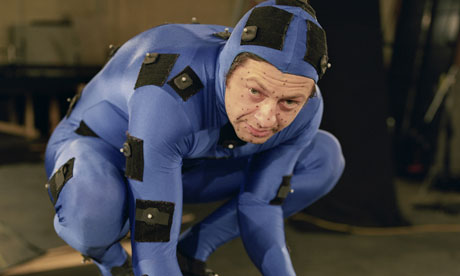
So yep. Those are the best film trilogies. I'm going to be doing this series till the world ends on December 21. If you have a recommendation for a list of "best _____ of all time" please comment below and let me know. Or if you want to comment about anything else please comment below. Yup.
Subscribe to:
Posts (Atom)